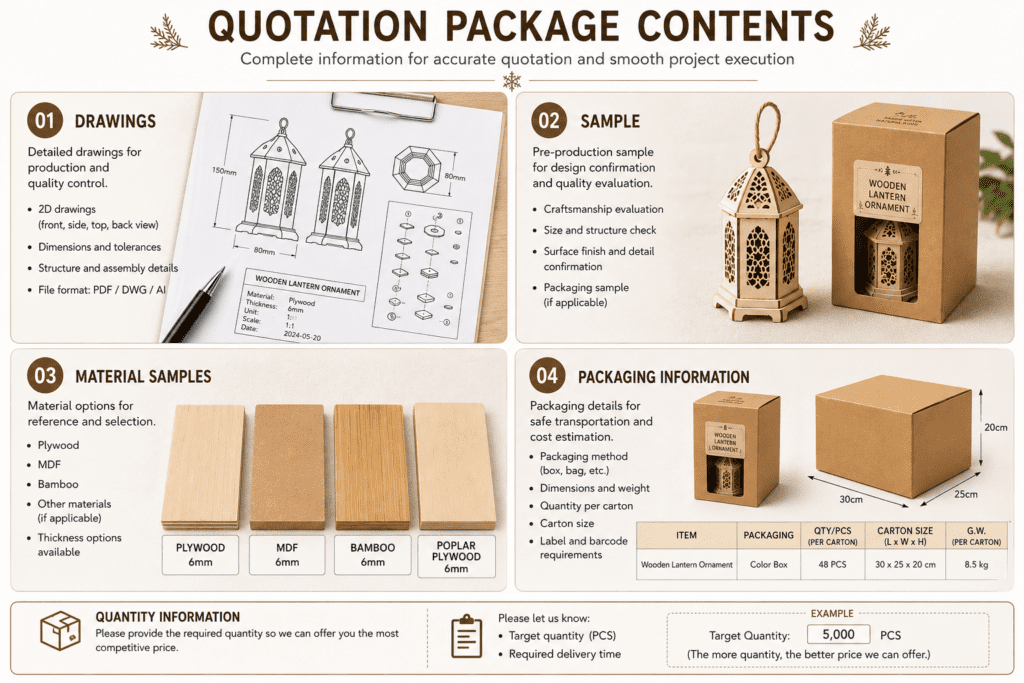
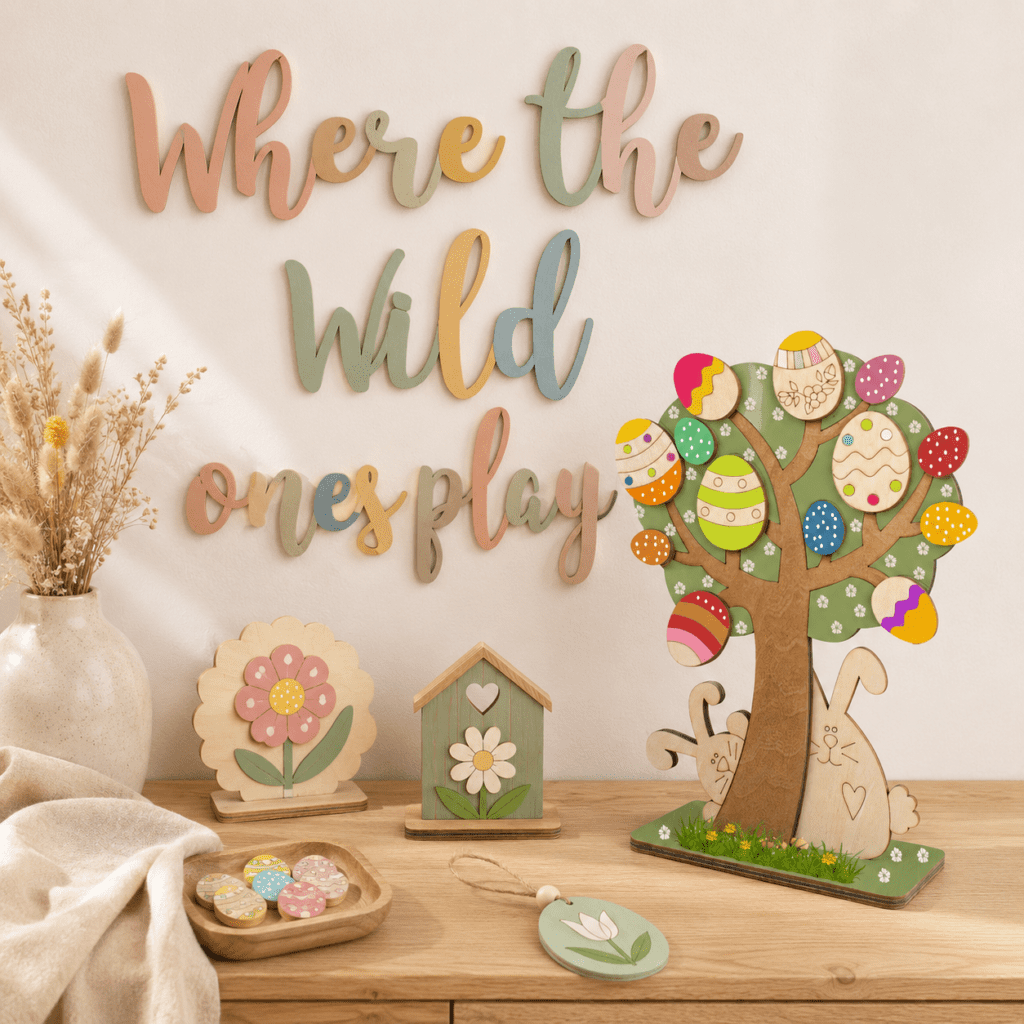
Choosing the right wood thickness for laser cut crafts is not only a design decision. It affects product strength, cutting quality, weight, cost, packaging, and shipping. For wholesale buyers, the best thickness depends on how the product will be used, what material is selected, and whether the item needs to hang, stand, stack, assemble, or fit into retail packaging.
Why Wood Thickness Matters in Laser Cut Crafts
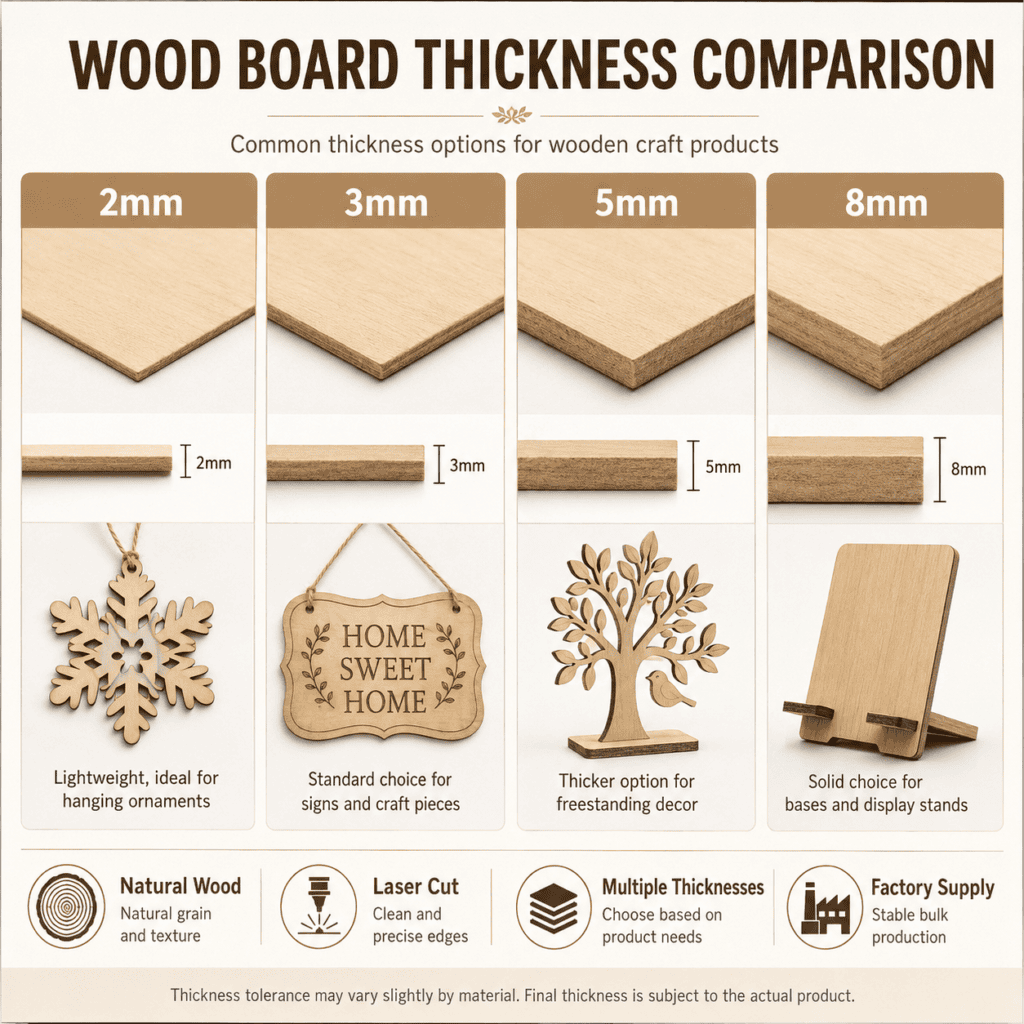
In custom wooden craft production, thickness changes the whole product experience. Thin wood is lighter and easier to use for tags, ornaments, cards, and small decorations. Thicker wood can feel stronger and more stable, but it may need more cutting time, sanding, and packaging protection.
A good thickness choice should balance appearance, function, cost, and shipping. For example, a hanging ornament should not be too heavy, while a tabletop sign should be thick enough to stand or fit into a base.
Common Wood Thickness Options
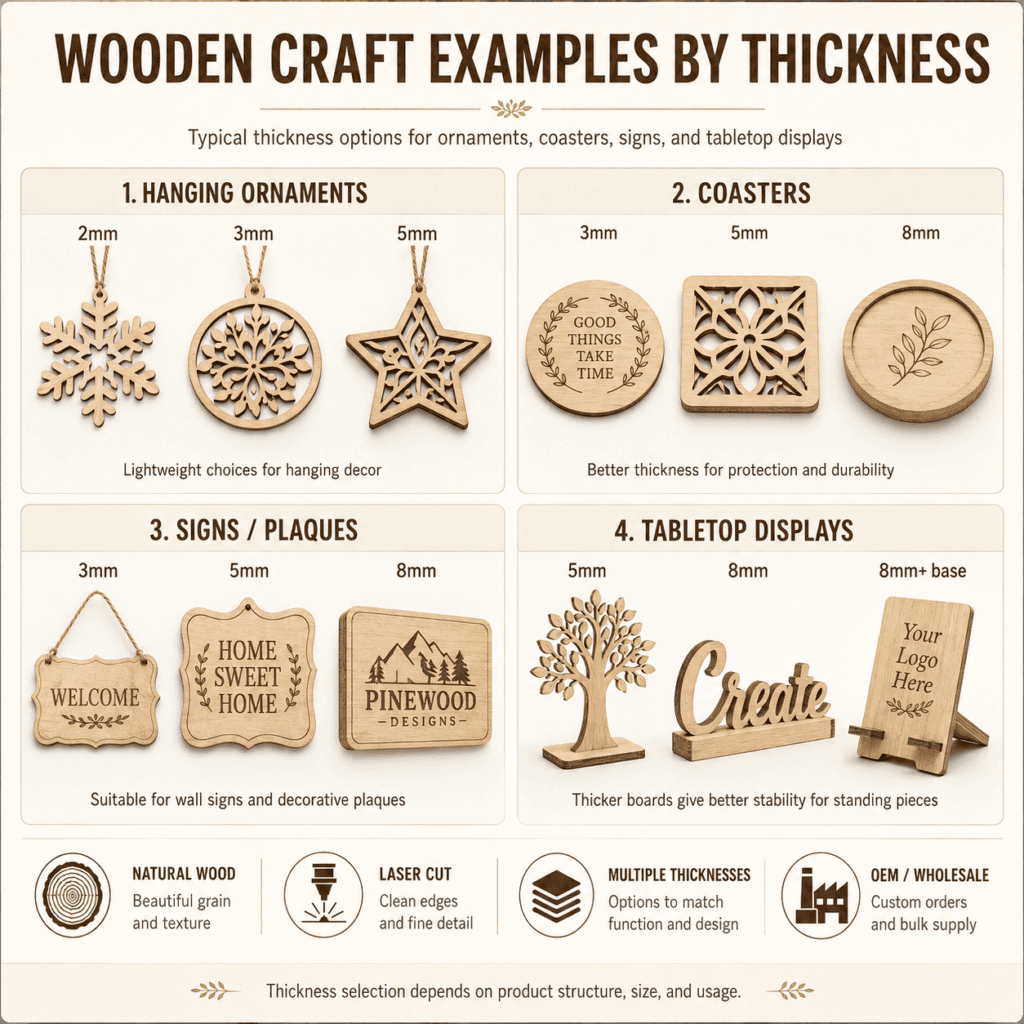
2mm to 3mm: Lightweight Ornaments and Tags
Thin wood is often used for hanging ornaments, gift tags, greeting cards, packaging accessories, and small promotional items. It is suitable when buyers need a light product with simple structure.
However, very thin parts can bend or break more easily, especially if the design has narrow lines or large hollow areas. Sample checking is recommended before bulk production.
3mm to 5mm: General Laser Cut Crafts
This range is commonly used for wooden ornaments, signs, coasters, plaques, small decorations, and layered craft pieces. It gives a better balance between weight, strength, and cutting efficiency.
For many wholesale wooden craft projects, this range is a practical starting point, but the final choice still depends on size, material, design detail, and packaging.
5mm to 8mm: Stands, Bases, and Stronger Parts
Thicker wood is useful for tabletop signs, display bases, small shelves, thicker plaques, and products that need more structure. It can improve stability, especially for items that stand upright.
The buyer should also consider product weight, carton size, and whether the thicker edge appearance matches the product style.
Match Thickness with Product Function
Hanging Products
For tree ornaments, wall hangings, gift tags, and small decorative pieces, weight is important. A product that is too thick may feel heavy or pull on the string, ribbon, or hook. Hole position and edge strength should also be checked.
Tabletop Products
For table signs, desk decorations, name plaques, and small displays, the product may need a base or slot structure. Thickness affects how tightly parts fit together and whether the finished product stands well.
Layered and Assembled Products
Layered wooden crafts often use several pieces stacked together. If each layer is too thick, the final product may become heavy or difficult to pack. If the material is too thin, the finished item may not feel stable enough.
OEM & ODM Services
Ready to turn your ideas into finished wooden products? Discover our complete OEM and ODM service, from design review and sample development to mass production, quality control, and worldwide delivery.
OEM and ODM Wooden Craft Service →Material Choice Also Affects Thickness
Plywood, MDF, bamboo, birch, beech, and other wood materials behave differently during laser cutting. Plywood is widely used for detailed laser cut crafts. MDF has a smooth surface and is often used for painted or printed products. Bamboo and solid wood options may be chosen for certain product styles, but thickness availability can vary.
Buyers should not choose thickness alone. The factory needs to review material type, sheet quality, surface finish, and cutting details together.
How Thickness Affects Cutting, Engraving, and Finish
Thicker wood usually needs more laser cutting time. It may also create a darker cutting edge, depending on material and machine settings. If the design has small text, fine lines, or detailed hollow patterns, the factory should check whether the selected thickness is suitable.
Laser engraving, UV printing, painting, and staining can also look different depending on material thickness and surface texture. Before bulk production, buyers should confirm the sample for edge color, surface finish, engraving clarity, and printing position.
Packaging and Shipping Considerations
Wood thickness affects product weight and packing space. Thin products may need flat protection to avoid bending. Thicker or assembled products may need inner boxes, dividers, foam sheets, or stronger cartons.
For retail orders, packaging should be checked together with the product sample. A product may look good by itself but still need adjustment if it is too tight in a box or too loose inside a display package.
Related Wooden Craft Products
Looking for custom wooden products for wholesale, retail, or branded packaging projects? Explore our OEM wooden craft solutions below.
View Custom Wooden Decor Products →What Buyers Should Confirm Before Bulk Production
Before confirming the final thickness, buyers should check product size, material, function, surface process, packaging method, order quantity, and target price. If the product has slots, holes, thin lines, or assembled parts, sample approval is especially important.
If the product is for a special market or regulated use, related requirements should be confirmed before production.
If you are developing laser cut wooden crafts for wholesale, retail, gifts, seasonal decorations, or promotional projects, you can send your design and target use to us. We can help review material thickness, cutting structure, surface process, and packaging direction before sample making.