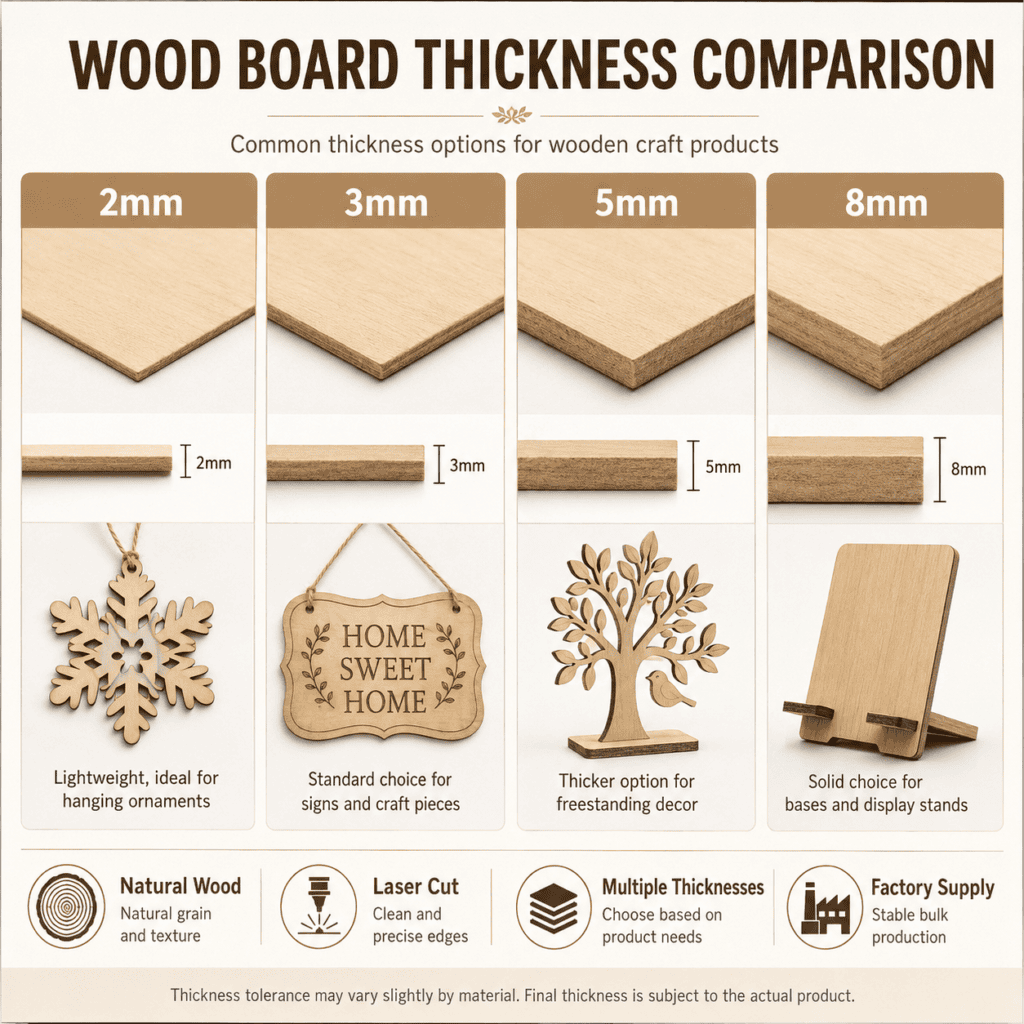
Choosing the right material is one of the most important steps when developing laser cut wooden crafts. The material affects not only the look of the final product, but also the cutting quality, engraving effect, strength, surface finish, cost, packaging, and customer experience.
For laser cut wooden products, plywood and MDF are two of the most commonly used materials. Both are widely used for wooden signs, ornaments, display stands, wall décor, nursery decorations, gift tags, seasonal products, DIY craft blanks, and custom OEM/ODM wooden craft projects.
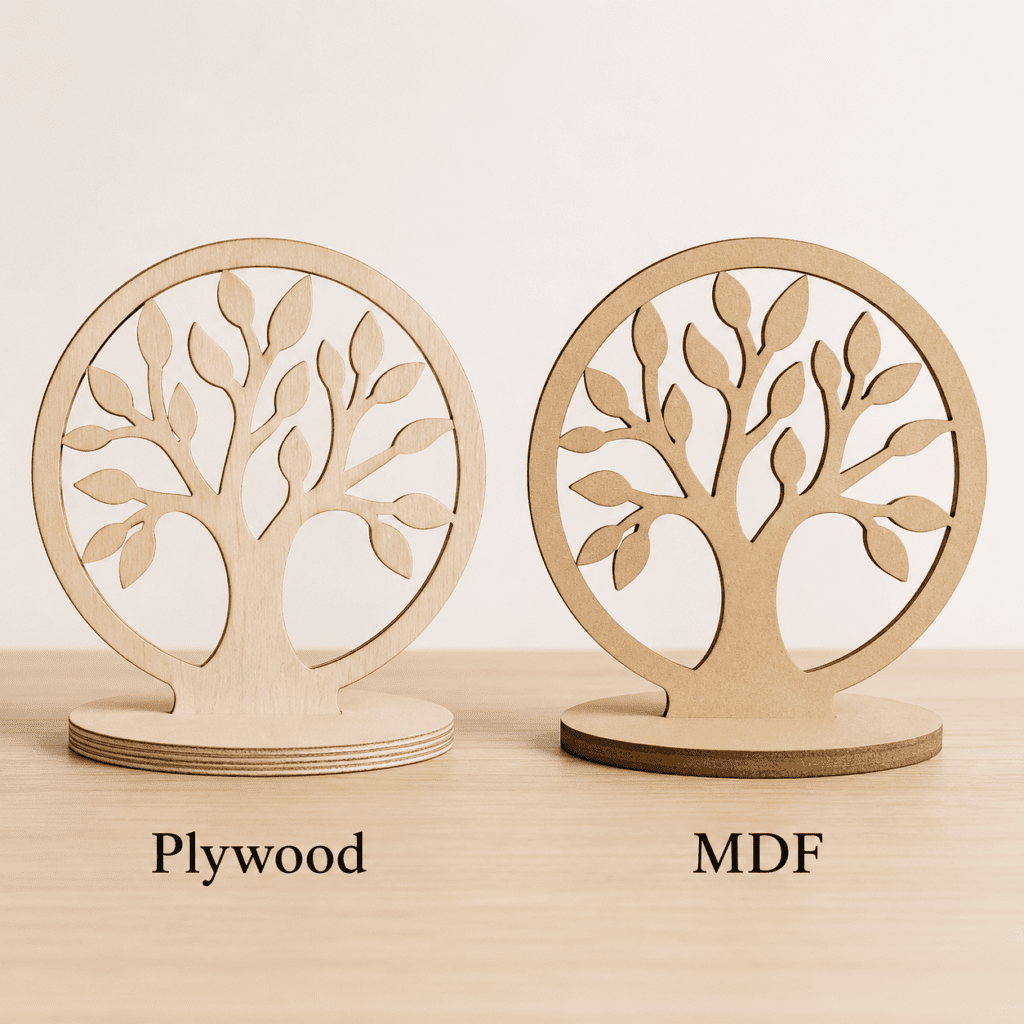
However, plywood and MDF are not the same. Plywood has visible wood grain and better structural strength, while MDF has a smoother and more uniform surface that is especially suitable for painting and printing.
For brands, wholesalers, importers, and online sellers, understanding the difference between plywood and MDF can help you choose the right material for your product line and avoid unnecessary quality or cost issues.
What Is Plywood?
Plywood is an engineered wood material made by bonding several layers of thin wood veneers together. The layers are usually arranged in alternating grain directions, which helps improve strength and stability.
Because plywood contains real wood veneers, it often has a more natural appearance. The surface may show wood grain, color variation, and a warmer texture. This makes plywood a good choice for wooden crafts where the natural wood look is part of the product design.
Plywood is commonly used for:
- Wooden ornaments
- Wooden wall signs
- Wooden gift tags
- Wooden display stands
- Holiday decorations
- Nursery décor
- Engraved wooden products
- Custom wooden craft kits
For products that need a natural, rustic, eco-friendly, or premium appearance, plywood is usually a strong material option.
What Is MDF?
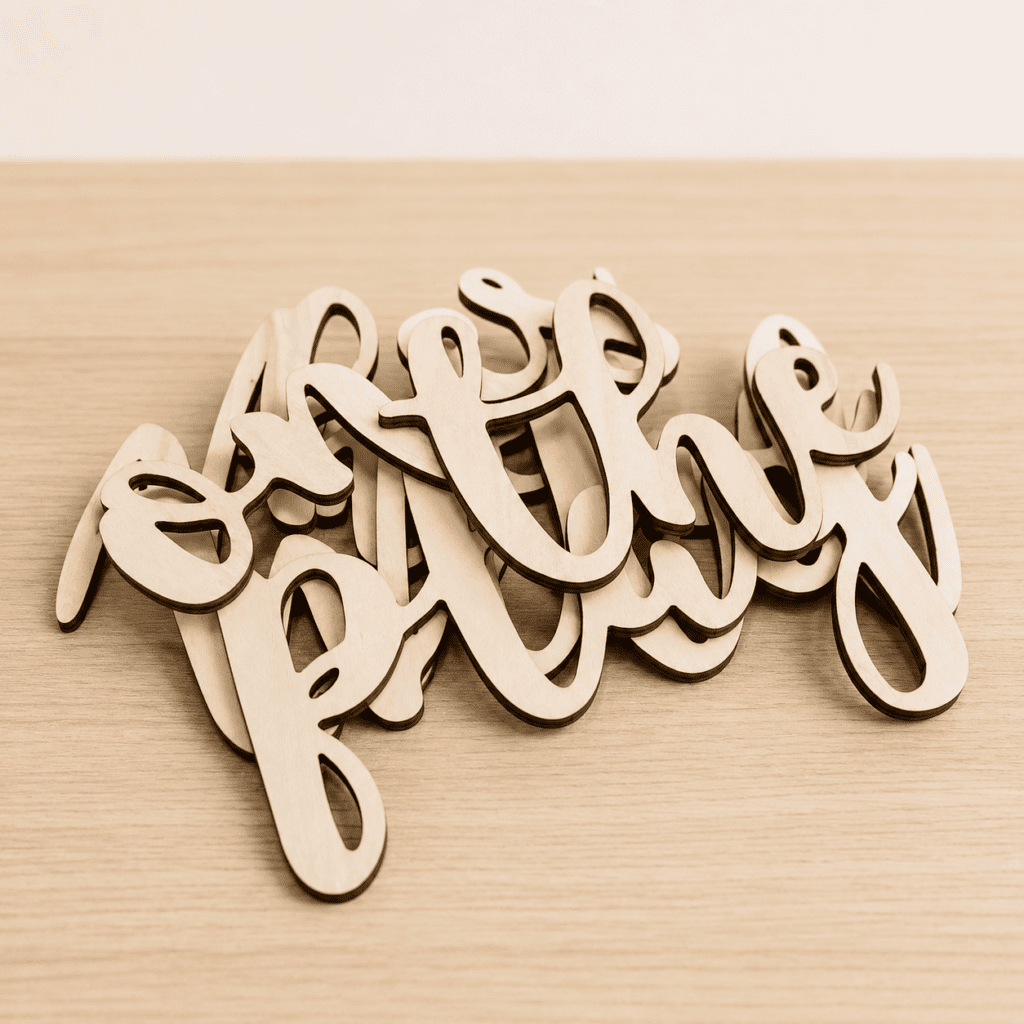
MDF stands for Medium Density Fiberboard. It is made from wood fibers, resin, and other binders that are compressed into dense and flat panels.
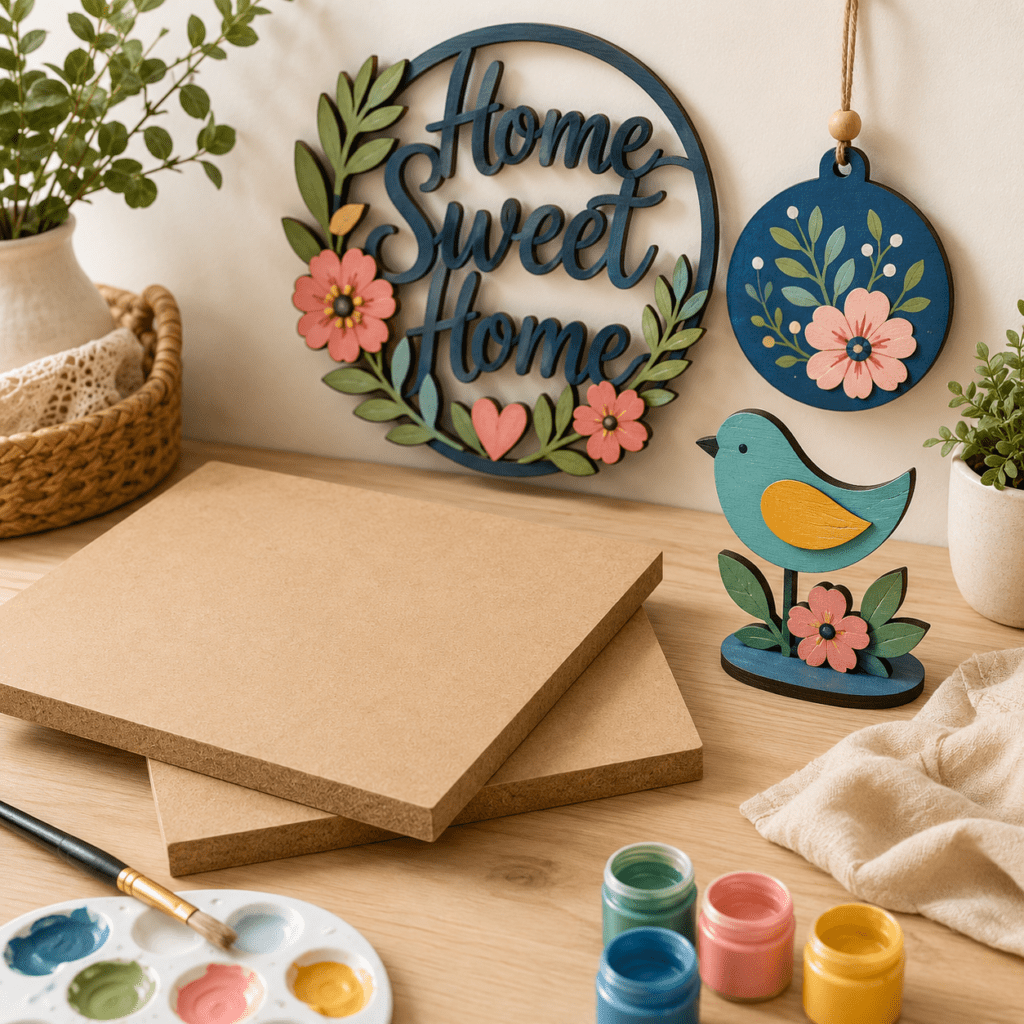
Unlike plywood, MDF does not have visible wood grain. Its surface is smooth, even, and consistent. This makes MDF especially useful for painted products, decorative shapes, printed designs, and craft blanks.
MDF is commonly used for:
- Painted wooden signs
- Wall letters
- Wooden plaques
- DIY craft blanks
- Tabletop decorations
- Event decorations
- Seasonal ornaments
- Custom printed wooden crafts
If your product needs a smooth painted surface, clean shape, stable thickness, and cost-effective production, MDF can be a practical choice.
Plywood vs MDF: Key Differences
The main difference between plywood and MDF comes from their structure.
Plywood is made from layers of wood veneer, so it keeps some natural wood characteristics. MDF is made from compressed wood fibers, so it is more uniform and smooth.
| Comparison | Plywood | MDF |
|---|---|---|
| Material structure | Wood veneer layers | Compressed wood fibers |
| Surface look | Natural wood grain | Smooth and uniform |
| Strength | Generally stronger | Less strong than plywood |
| Edge appearance | Layered edge | Smooth dense edge |
| Engraving effect | Natural and textured | Clean and consistent |
| Painting | Good, but grain may show | Very suitable for painting |
| Wood stain | Suitable | Not ideal |
| Cost | Usually higher | Usually more cost-effective |
| Best for | Natural wooden crafts and display products | Painted, printed, and decorative craft blanks |
In simple terms, plywood is better when you want natural wood texture and better strength, while MDF is better when you want a smooth painted surface and lower production cost.
Laser Cutting Performance
Both plywood and MDF can be laser cut, but their cutting performance is different.
Plywood for Laser Cutting
Good-quality plywood can be laser cut into detailed shapes with clean results. However, plywood quality can vary depending on the wood veneer, glue, thickness, and internal layers.
If the plywood has uneven glue layers, internal gaps, or unstable density, it may cause cutting problems. This is especially important for thin lines, small details, delicate shapes, and bulk orders.
Common points to check when using plywood include:
- Cutting accuracy
- Edge burn marks
- Surface smoke marks
- Wood grain variation
- Internal layer quality
- Material thickness consistency
For laser cut wooden crafts that require strength and natural appearance, plywood is often worth considering, especially when the product will be sold as a premium wooden item.
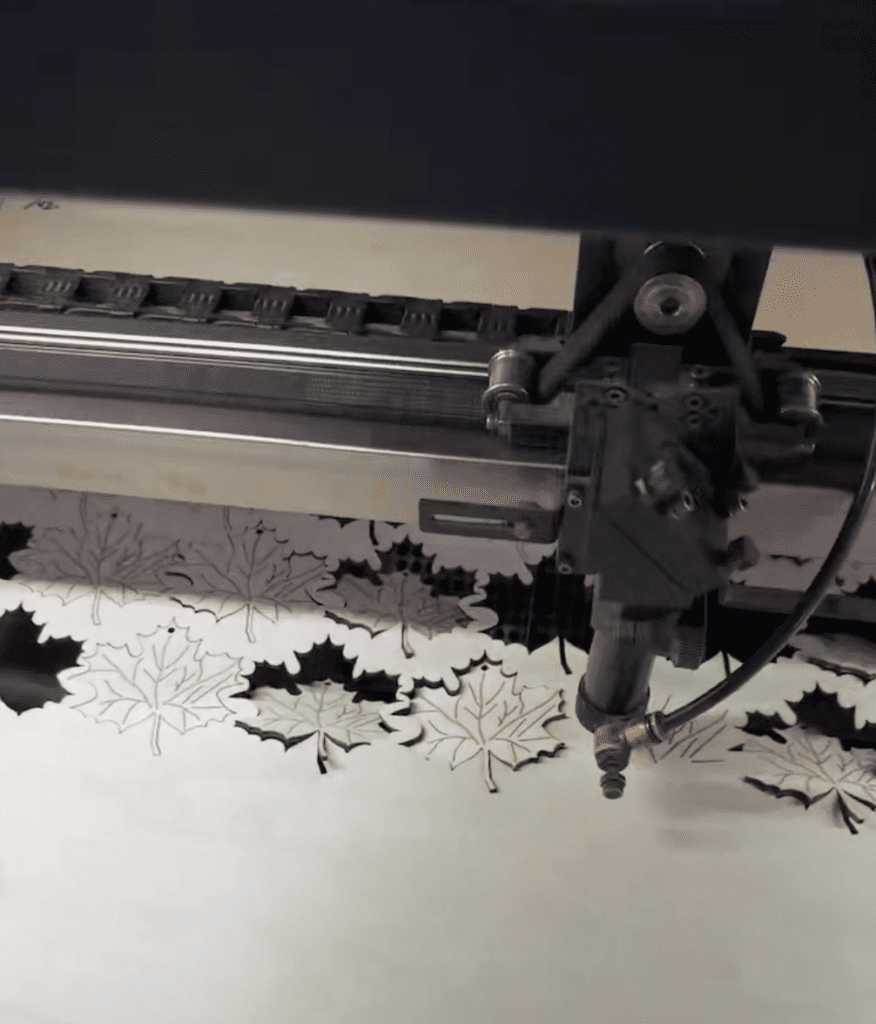
MDF for Laser Cutting
MDF is usually more uniform than plywood, so it often performs consistently during laser cutting. Since the material density is more even, the laser can cut clean and repeatable shapes.
MDF is suitable for detailed decorative shapes, wall letters, craft blanks, and products that will be painted or printed after cutting.
However, MDF can produce darker laser-cut edges and more smoke during cutting. For painted products, this is usually acceptable because the edges can be covered or finished during post-processing.
Laser Engraving Effect
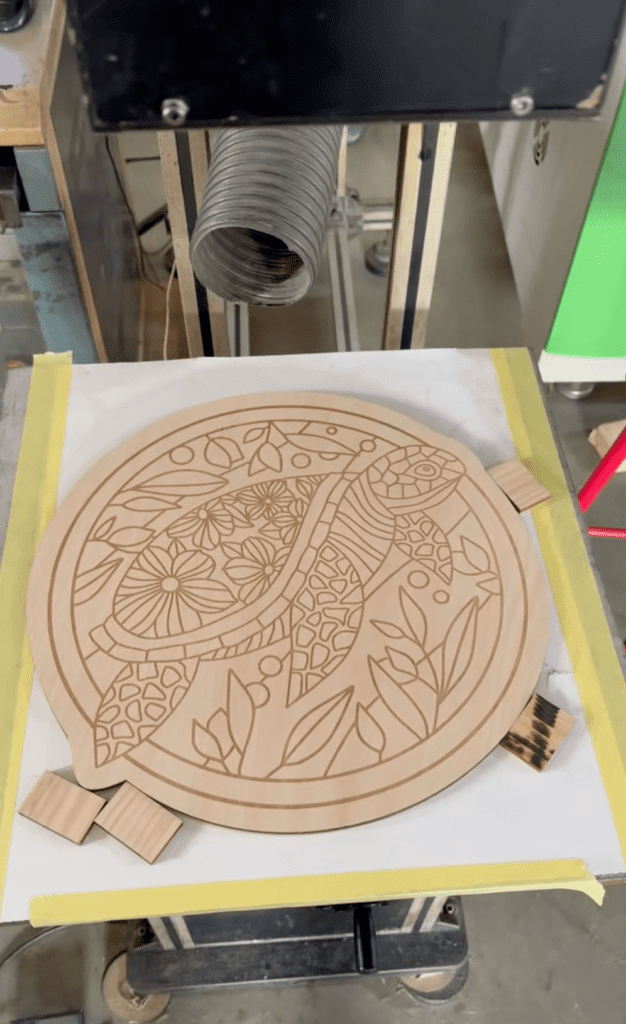
Laser engraving on plywood and MDF creates different visual effects.
Engraving on Plywood
Plywood engraving has a natural and warm appearance. Because the surface has wood grain, the engraving may show slight variation in tone and texture. This can make the product look more organic and handmade.
Plywood engraving is suitable for:
- Rustic wooden signs
- Personalized wooden gifts
- Natural ornaments
- Wedding decorations
- Engraved gift tags
- Branded wooden products
If your product design depends on visible wood texture, plywood usually gives a better natural engraving effect.
Engraving on MDF
MDF engraving is usually cleaner and more consistent because the surface is smooth and even. It works well for patterns, logos, outlines, letters, and craft blanks.
MDF engraving is suitable for products that will later be painted, coated, or printed. It is also useful when the buyer wants stable and repeatable engraving results across a large order.
Strength and Durability
Plywood is generally stronger than MDF. Its layered structure gives it better strength and flexibility, which makes it more suitable for products that need some structural support.
Plywood is often better for:
- Wooden display stands
- Hanging signs
- Wall décor
- Thin or delicate shapes
- Products with slots or assembly parts
- Items that may be handled frequently
MDF is dense and stable, but it is not as strong as plywood. It may break more easily when cut into very thin or narrow shapes. For flat decorative products, MDF works well. For load-bearing or assembled products, plywood is usually safer.
MDF is suitable for:
- Flat plaques
- Painted wall letters
- Decorative shapes
- Tabletop décor
- DIY craft blanks
- Simple seasonal products
Cost Considerations
Cost is often an important factor for wholesale wooden craft orders.
In many cases, MDF is more cost-effective than plywood. It is consistent, easy to process, and suitable for painted or printed decorative products. This makes it a good option for large-volume orders and price-sensitive products.
Plywood usually costs more, especially when a better surface grade is required. However, plywood can offer a more natural look, better strength, and higher perceived product value.
When choosing between plywood and MDF, buyers should not only compare material price. They should also consider:
- Product positioning
- Target market
- Surface finish
- Cutting complexity
- Packaging requirements
- Shipping weight
- Retail price
- Expected durability
Sometimes a slightly higher material cost can improve product quality and reduce after-sales issues.
Which Material Is Better for Different Wooden Crafts?
There is no single best material for all laser cut wooden crafts. The right choice depends on product design and market positioning.
| Product Type | Recommended Material | Reason |
|---|---|---|
| Wooden wall signs | Plywood or MDF | Plywood for natural style, MDF for painted finish |
| Wooden ornaments | Plywood | Lightweight and natural-looking |
| Painted plaques | MDF | Smooth surface for painting |
| Wooden display stands | Plywood | Better strength and support |
| Gift tags | Plywood or MDF | Depends on natural or painted style |
| Nursery wall letters | MDF or plywood | MDF for painted letters, plywood for natural wood |
| Holiday decorations | MDF or plywood | MDF for colorful finish, plywood for rustic style |
| DIY craft blanks | MDF | Smooth, affordable, easy to paint |
| Engraved gifts | Plywood | Better natural engraving effect |
| Printed wooden crafts | MDF | Smooth surface for UV printing |
For example, if you are developing rustic Christmas ornaments, plywood may be a better choice. If you are developing painted nursery wall letters or colorful decorative plaques, MDF may be more suitable.
FAQ: Plywood vs MDF for Laser Cut Wooden Crafts
Is plywood better than MDF for laser cutting?
Plywood is better when the product needs natural wood grain, better strength, and a more premium wooden appearance. MDF is better when the product needs a smooth painted surface and cost-effective production.
Is MDF good for laser cut wooden crafts?
Yes. MDF is widely used for laser cut crafts, especially painted signs, plaques, wall letters, craft blanks, and printed decorative products.
Can plywood be laser engraved?
Yes. Plywood can be laser engraved and usually creates a warm, natural, rustic effect.
Can MDF be painted?
Yes. MDF is very suitable for painting because it has a smooth and uniform surface.
Which material is better for wooden display stands?
Plywood is usually better for wooden display stands because it has stronger structural support than MDF.
Which material is more cost-effective?
MDF is usually more cost-effective. Plywood often costs more but provides better strength and a more natural appearance.
Final Thoughts
Both plywood and MDF are practical materials for laser cut wooden crafts, but they are suitable for different product goals.
Plywood is a good choice when the product needs natural wood grain, better strength, a lighter structure, and a more premium appearance. It works well for ornaments, display stands, engraved gifts, rustic signs, and natural-style decorations.
MDF is a good choice when the product needs a smooth surface, painted finish, stable thickness, and cost-effective production. It works well for plaques, wall letters, DIY blanks, printed products, and colorful seasonal decorations.