For wholesale buyers, understanding the custom wooden crafts manufacturing process can make communication with a factory much smoother. A custom project is not only about making a nice design. The factory also needs to check material, structure, cutting method, surface finish, printing, packaging, and bulk production stability before confirming the order.

Step 1: Project Inquiry and Design Review
A custom wooden crafts project usually starts with an inquiry. Buyers may send drawings, reference photos, product size, material ideas, logo requirements, packaging style, and estimated order quantity. If the buyer does not have a finished drawing, the factory can usually discuss the structure based on reference images and product use.
At this stage, the factory checks whether the design is suitable for wood production. Important details include thickness, small cut areas, assembly structure, printing area, engraving position, and whether the product needs to stand, hang, fold, or fit inside a package.
Step 2: Material Selection
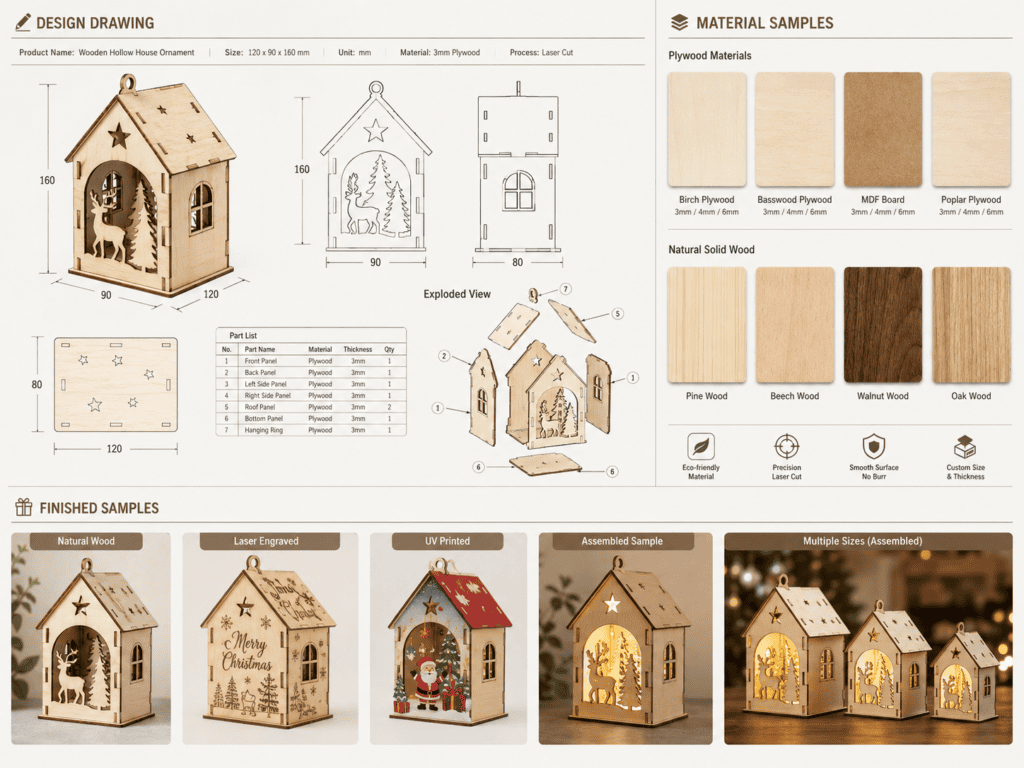
Different wooden crafts need different materials. Plywood is often used for laser cut ornaments, signs, tags, puzzles, and layered products. MDF is suitable for painted or printed products because the surface is smooth. Bamboo, beech, birch, and other wood materials may be used when buyers need a different texture or market positioning.
Before confirming the material, buyers should consider target price, product size, thickness, surface effect, printing method, and packaging requirements. Sample checking is recommended before bulk production.
Step 3: Drawing Confirmation and Sample Making
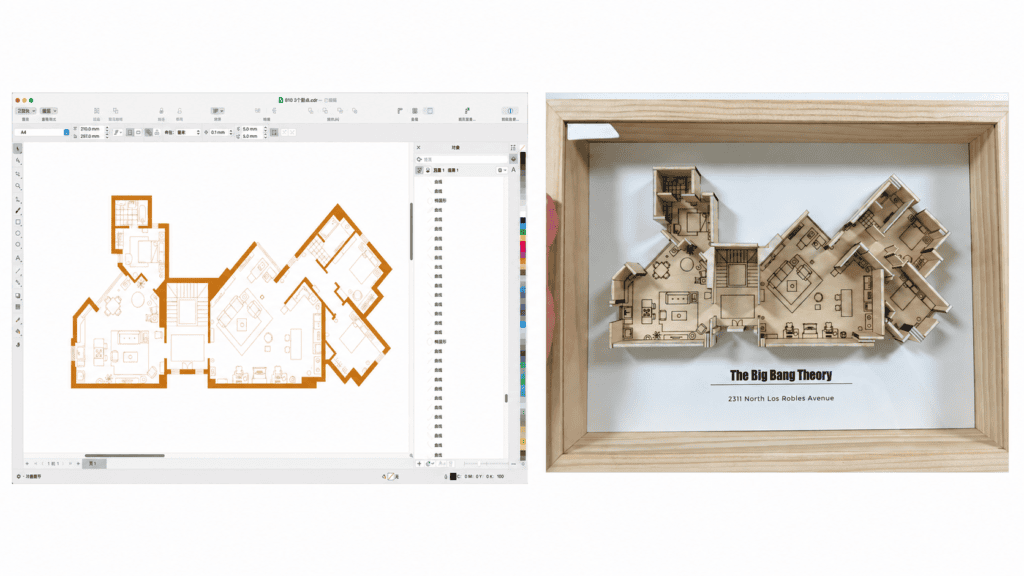
After the design direction and material are clear, the factory prepares production drawings or adjusts the artwork for cutting, engraving, or printing. For laser cut products, the outline and hollow parts need to be suitable for the chosen thickness. For printed products, color artwork and logo position should be checked carefully.
The sample stage is important because it confirms the real size, material feel, surface finish, structure, and packaging direction. Buyers should review the sample for appearance, function, color, logo placement, and overall presentation before moving to mass production.
Step 4: Cutting, Shaping, and Basic Processing
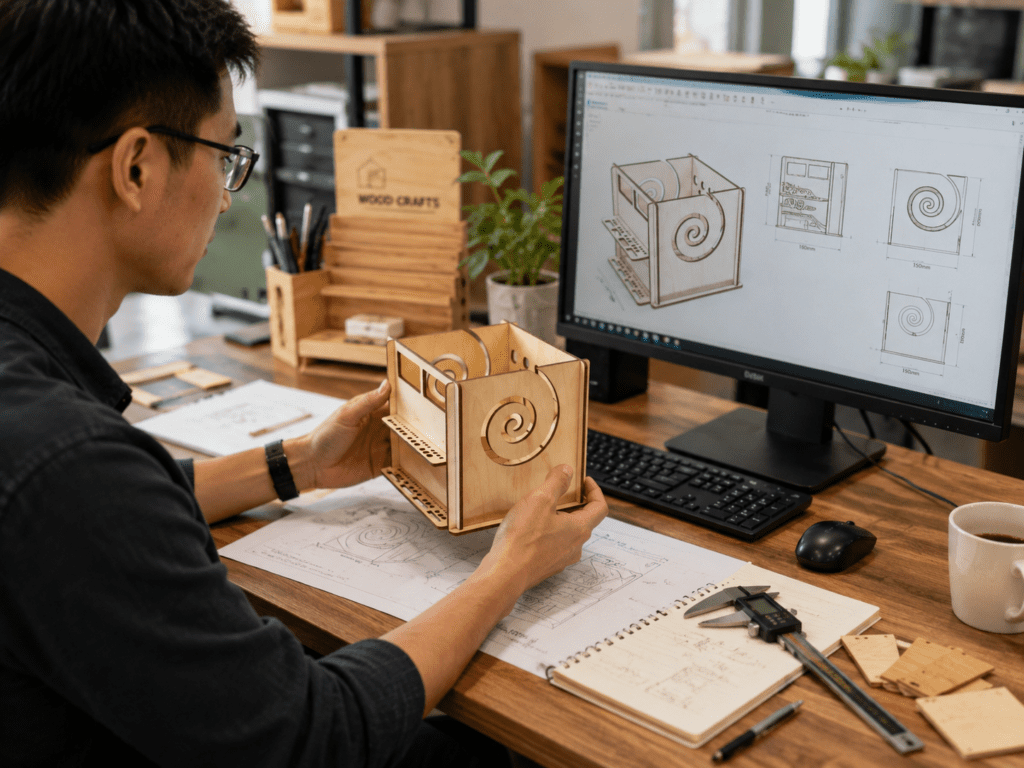
Once the sample is approved, the factory can arrange bulk production. Depending on the product, the process may include laser cutting, CNC cutting, drilling, carving, sanding, or shape trimming. Laser cutting is suitable for detailed outlines, hollow designs, ornaments, tags, signs, and small decorative products. CNC processing is often used for thicker products or shapes that need more depth.
After cutting, wooden parts may need sanding or edge cleaning. This step helps improve the surface feel and reduces rough edges before printing, painting, engraving, or assembly.
Step 5: Surface Finish, Printing, and Engraving
Surface treatment depends on the product style. Some wooden crafts keep a natural wood finish, while others use staining, painting, UV printing, laser engraving, or a combination of methods.
UV printing is useful for colorful graphics, brand logos, and product patterns. Laser engraving can create text, lines, names, decorative details, or logo marks. If the buyer has strict color requirements, sample approval is important because wood material and surface texture can affect the final color.
OEM & ODM Services
Ready to turn your ideas into finished wooden products? Discover our complete OEM and ODM service, from design review and sample development to mass production, quality control, and worldwide delivery.
OEM and ODM Wooden Craft Service →
Step 6: Assembly and Accessory Matching
Some wooden crafts are simple single-piece products, while others need assembly. Examples include layered decorations, wooden boxes, display stands, photo frames, wall signs, desktop ornaments, and gift sets. Accessories may include rope, ribbon, magnets, hooks, screws, cards, bases, or packaging inserts.
For assembled products, the factory should check fit, stability, glue marks, accessory matching, and packing sequence. Buyers should also confirm whether the item will be shipped assembled or flat packed.
Step 7: Quality Checking Before Packing
Quality checking is an important part of the wooden crafts manufacturing process. Common checking points include size, thickness, cutting edge, surface scratches, color consistency, printing position, engraving clarity, assembly fit, accessory quantity, and packaging accuracy.
For bulk orders, an approved sample should be used as the reference. If the product is sold as a retail set, the factory also needs to check whether all pieces and accessories are included in each package.
Step 8: Packaging and Export Preparation
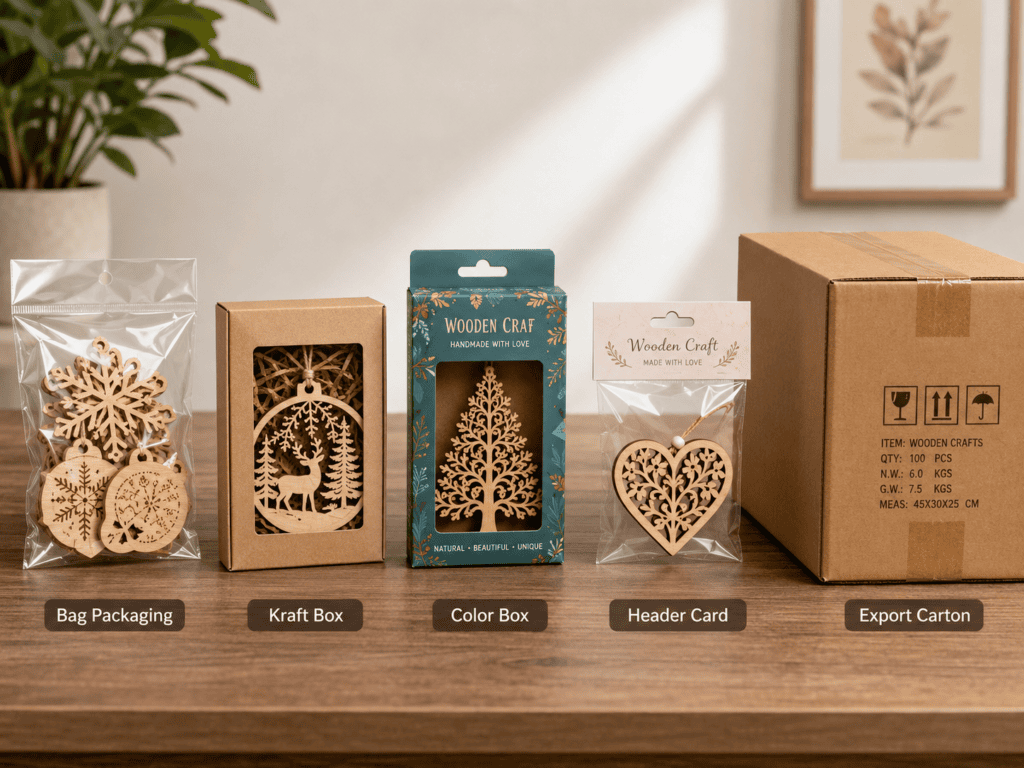
Packaging should be confirmed before mass production, especially for products sold through retail stores, online platforms, or gift channels. Common options include polybag packing, kraft box, white box, printed color box, header card, display box, or custom gift set packaging.
For export orders, buyers may also need barcode labels, carton marks, inner box packing, drop protection, and pallet requirements. Lead time depends on design complexity, sample approval speed, order quantity, finishing process, and packaging work.
How Buyers Can Make the Process Faster
A clear inquiry helps the factory respond faster and reduce repeated revisions. Buyers can prepare product drawings, reference images, size, thickness, material choice, printing or engraving details, logo files, packaging style, order quantity, and target delivery date.
If you are planning a custom wooden crafts project, you can send your design idea and order requirements to our team. We can review the material, structure, production process, and packaging direction before sample making.